Research
-
Sacred Stoops: Typological Studies of Black Congregational Spaces
-
GRANTEE
Germane BarnesGRANT YEAR
2018

Madlener House
4 West Burton Place
Chicago, Illinois 60610
Telephone: 312.787.4071
info@grahamfoundation.org
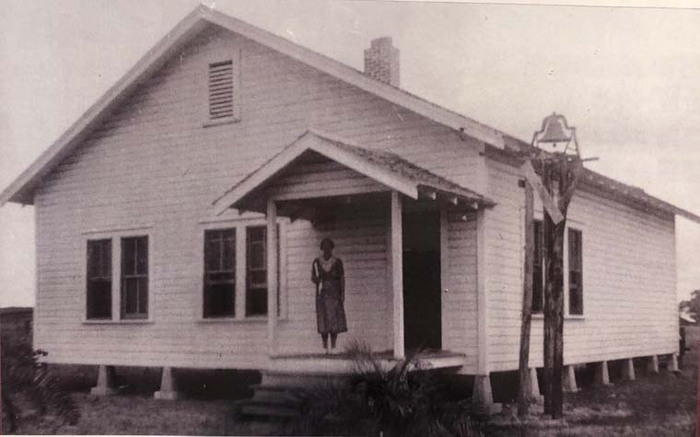
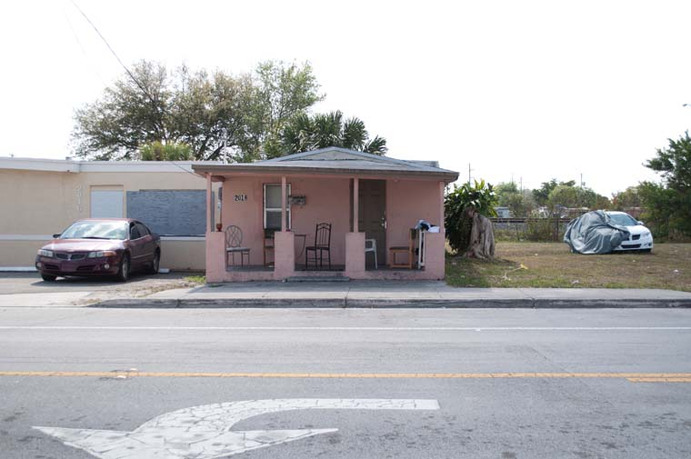
Author unknown, photograph, Sarasota, FL. Courtesy of Newtown Museum.
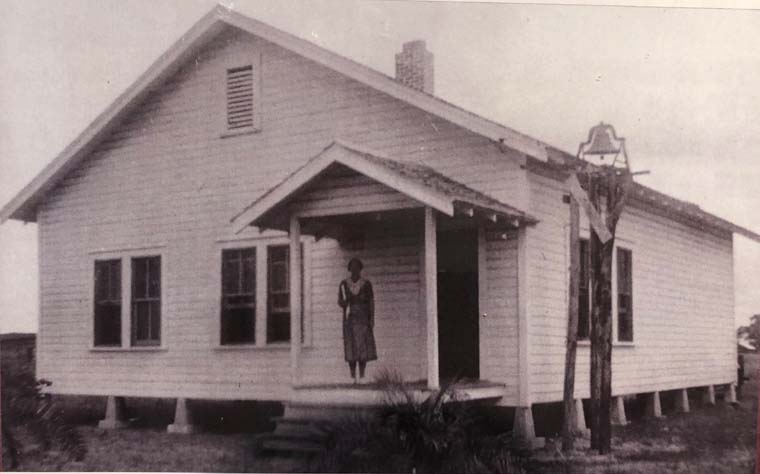
Sacred Stoops: Typological Studies of Black Congregational Spaces, is an investigation of the porch and its role in the African-American community. The porch is one of the most recognizable symbols in the history of the traditional American home. From historic shotgun homes in New Orleans to bungalow homes in Chicago, the porch has been a key space of congregation for African-Americans. Often viewed as an accessory to the main structure, this covered area shapes the narrative of many who utilize it. Operating as interstitial space, simultaneously public and private, the stoop has molded the perception of numerous black communities. Depending on vernacular and location, the porch manifests itself in many different ways. It is also an overt reminder of how racism and the built environment continue to shape this country. The porch is an important space for observation of collective identity and entry point to the home as well as issues of race, segregation, and spatial politics.
Germane Barnes is a Chicago-born, Miami-based licensed architect, designer, and founding principal of Studio Barnes a research and design practice that investigates the connection between architecture and identity, examining architecture’s social and political agency through historical research and design speculation. His work has been exhibited in the Art Institute of Chicago, The Museum of Modern Art's Reconstructions: Architecture and Blackness in America, and the 2021 Chicago Architecture Biennial. He is a winner of the Architectural League Prize and is a Rome Prize Fellow at the American Academy in Rome. He was selected in the inaugural cohort of The Dorchester Industries Experimental Design Lab created by Theaster Gates and sponsored by Prada. His work has also been featured and acquired to the permanent collections of international institutions most notably San Francisco Museum of Modern Art, Los Angeles County Museum of Art, The New York Times, and the National Museum of African American History and Culture. His project, Griot was widely published, as a participant in Biennale Architettura 2023, Laboratory of the Future.
Copyright © 2008–2026 Graham Foundation. All rights reserved.