Exhibition
-
If Architecture Could DanceNorman Teague and Bernard Williams
ArtistsEdith Farnsworth House, Plano
Jun 05, 2027 to Dec 18, 2027 -
GRANTEE
Norman Teague & Bernard WilliamsGRANT YEAR
2026

Madlener House
4 West Burton Place
Chicago, Illinois 60610
Telephone: 312.787.4071
info@grahamfoundation.org
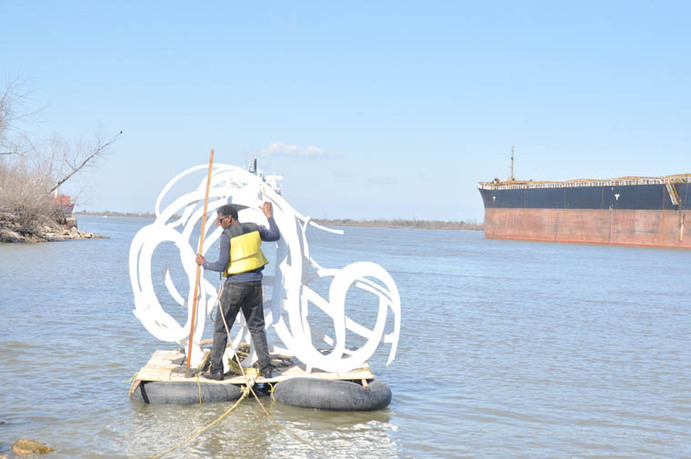
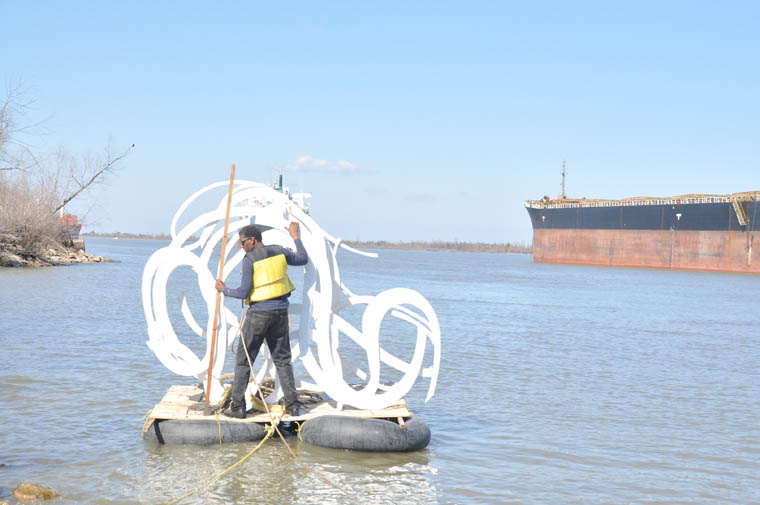
Bernard Williams, “Ghost Trails on the Mississippi River,” A Studio in the Woods, New Orleans, LA, 2011. Courtesy Bernard Williams
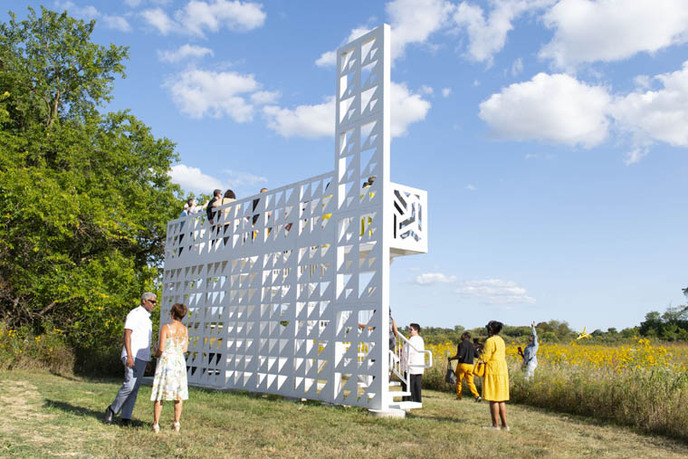
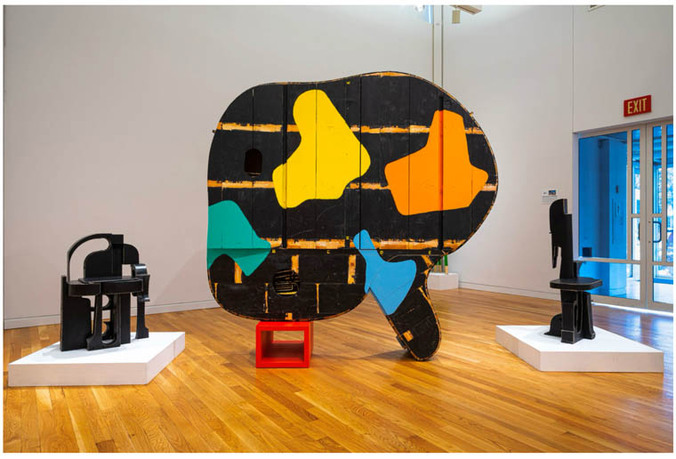
This project proposes that architecture is not only built in steel and glass, but also in memory, music, and movement. Set at the iconic modernist Edith Farnsworth House, in Plano, IL, designed by Mies van der Rohe and completed in 1951, this installation stages a quiet disruption of floating sculptures adrift on the Fox River, jazz-inspired figures forming a sculptural audience on the lawn, and community members entering the scene adorned in hand-crafted, wearable structures. Together, they perform a new geometry: one rooted in Black traditions of procession, improvisation, and joy. Drawing from the legacy of Bauhaus theater and Black cultural pageantry, this work overlays a modernist site with presence, rhythm, and resistance. It asks: if architecture could dance? Could listen? Could witness? If Architecture Could Dance is a spatial intervention, a living archive, and a celebration of forms left out of the canon. It insists that performance is architecture and that to truly remember, spaces must be reactivated by the people they once excluded.
Norman Teague and Bernard Williams are interdisciplinary artists based in Chicago whose practices span design, architecture, sculpture, and public engagement. Both artists have strong relationships with architecture, which continues to inform their approach to space, form, and cultural narrative. Teague, a designer and educator with a background in industrial design and architecture, explores the role of design in social impact, with recent projects including the 2023 US Pavilion at the 18th International Architecture Exhibition, La Biennale di Venezia, Venice and Designer’s Choice: Jam Sessions at The Museum of Modern Art. Williams, a visual artist with architectural foundations, creates large-scale public artworks that explore race, history, and American identity through abstraction and spatial symbolism. Their collaboration reflects a shared commitment to rethinking the built environment through cultural presence, performance, and civic dialogue. If Architecture Could Dance marks a significant expansion in both of their practices—integrating land, water, and community participation into a materially ambitious, conceptually layered intervention into architectural discourse.
Copyright © 2008–2026 Graham Foundation. All rights reserved.