Exhibition
-
The Feathered Whale and Other Works by Enrique Murillo, Xalapa, MexicoWonne Ickx and Frida Mouchlian
CuratorsLIGA–Space for Architecture, Mexico City
Summer 2027
-
GRANTEE
LIGA–Space for ArchitectureGRANT YEAR
2026

Madlener House
4 West Burton Place
Chicago, Illinois 60610
Telephone: 312.787.4071
info@grahamfoundation.org
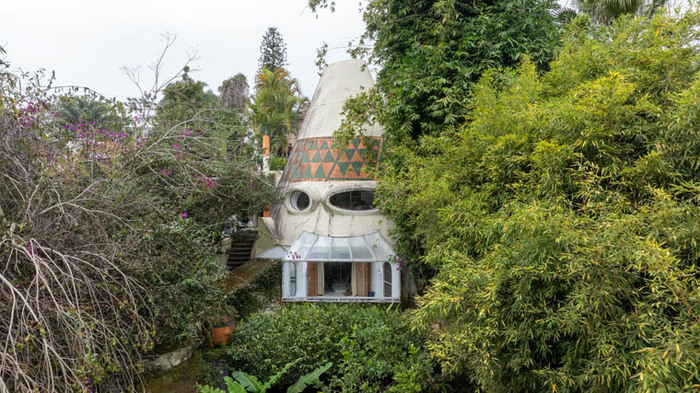
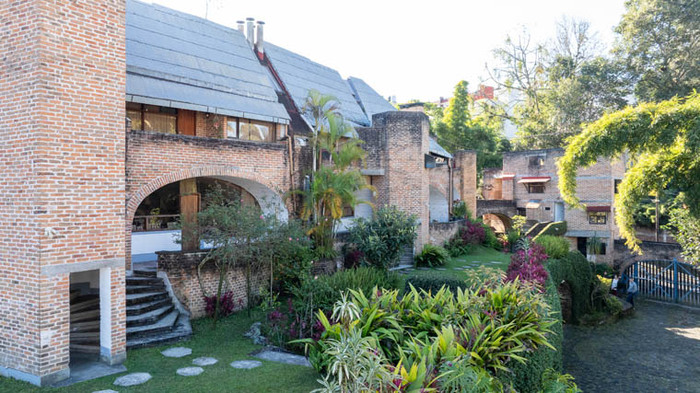
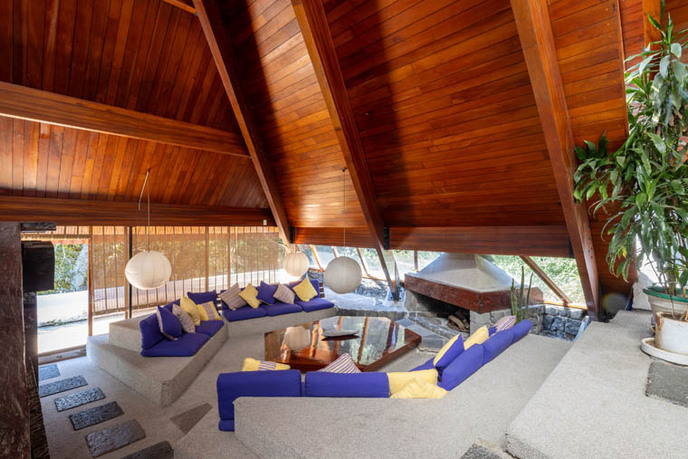
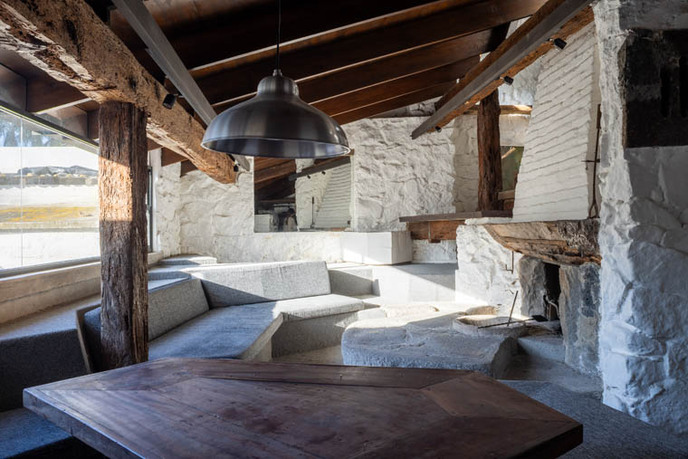
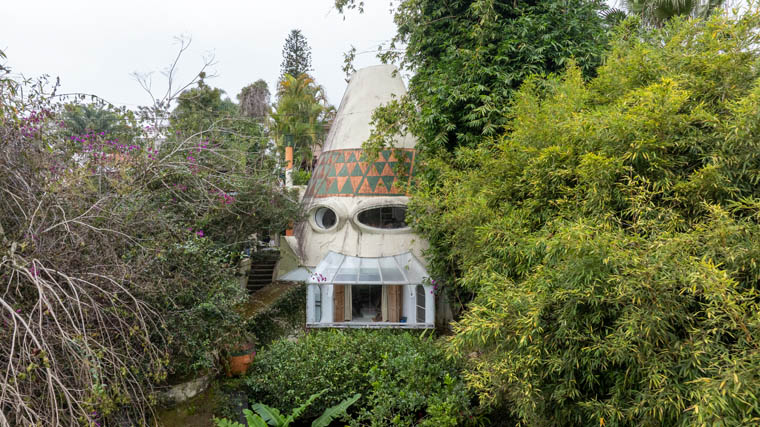
Enrique Murillo, “Cone House,” Xalapa, Mexico, 1993. Digital photograph. Courtesy LIGA. Photo: Arturo Arrieta, 2026
This project offers a critical survey of the architecture of Enrique Murillo, a Veracruz-based architect whose work developed primarily in Xalapa, Mexico. Murillo approached each project by testing materials, construction systems, and spatial organizations in design and construction. Influenced by Xalapa’s topography and building traditions, Murrillo’s architecture is organized through platforms, level changes, and integrated furniture, producing dynamic interior and exterior spatial sequences that function as sites of experience, experimentation, and improvisation. Despite the extent of his production, the work remains largely undocumented and virtually unknown beyond its local context. The project makes accessible and activates a selection of Murillo’s work through newly produced visual material. Presented in the exhibition are historical photographs, digital renderings of original architectural drawings, and complimentary interviews conducted with architects and researchers in connection to his practice. Developed as part of LIGA’s ongoing effort to disseminate overlooked Latin American architectural practices, the project functions as a focused examination of an individual architect’s work.
Enrique Murillo (1933–2021) was a Mexican architect whose work helped define the contemporary architectural identity of Xalapa and the state of Veracruz. A graduate of the National Autonomous University of Mexico (UNAM), he developed a diverse body of work spanning civic, cultural, educational, and residential architecture. His best-known projects include the Central de Autobuses de Xalapa (CAXA), the Universidad Veracruzana’s network of Unidades de Servicios Bibliotecarios y de Información (USBI), and the Sala de Conciertos Tlaqná. In addition to his architectural practice, Murillo taught at the Universidad Veracruzana, where he was named Maestro Emérito in 1992. His work is recognized for its engagement with regional conditions, topography, and local architectural traditions.
Wonne Ickx studied civil engineering and architecture at the University of Ghent, Belgium and Urban Studies at the Centre for Metropolitan Studies (CEMET) in Guadalajara, Mexico. In 2006, he founded PRODUCTORA in Mexico City, together with Abel Perles, Carlos Bedoya, and Victor Jaime. PRODUCTORA has received many awards for its work, including the prestigious Oscar Niemeyer Prize for Latin American Architecture. Ickx has taught architecture at Harvard University Graduate School of Design, Illinois Institute of Technology, University of California, Los Angeles, Rice University and several universities in Mexico, and is visiting lecturer at Princeton University. He is cofounder of LIGA—Space for Architecture, an independent platform that promotes Latin American architecture in Mexico City since 2011. He publishes his writing frequently and is part of the editorial board of Arquine, the leading architecture magazine in Latin America, since 2010.
Frida Mouchlian is an architect, researcher, and curator based in Mexico City. She holds a degree in architecture from the Universidad Politécnica de Madrid (ETSAM) and a master’s degree in art studies from Universidad Iberoamericana in Mexico. Her work combines architectural research, curatorial practice, and cultural management, with a focus on the relationships between space, art, and power. Her academic and professional projects explore the cultural imaginaries surrounding the built environment throughout the twentieth century, particularly within the context of Mexico and Latin America.
Nolan Boomer is a doctoral candidate in the history of art and architecture at Harvard University. Their dissertation traces the circulation of the modern racial discourse of indigenismo between Mexico, Peru, and the United States, and how it shaped early twentieth century architecture. They have published essays in the New York Review of Architecture, PIN-UP, and Places Journal. Their work has been supported by fellowships and awards from Fulbright-García Robles, the Graham Foundation, and the International Center for the Arts of the Americas. Boomer is project coordinator for documentation and research for The Feathered Whale.
Valentina Rivero Coello is a Mexican architect based in Mexico City. She holds a bachelor’s degree in architecture and urban planning from Universidad Iberoamericana. Her work focuses on architectural research and historiography, with particular interest in modern architecture within cultural and territorial contexts. Her undergraduate thesis examined the recovery and systematization of architect Enrique Murillo’s professional materials (1954–2021), contributing to the study of modern architecture in Veracruz. Her academic training has been complemented by international programs at Harvard University Graduate School of Design and Lorenzo de’ Medici in Florence. Rivero Coello is research assistant for The Feathered Whale.
LIGA–Space for Architecture is a nonprofit independent platform founded in Mexico City in 2011 that promotes Latin American contemporary architecture through exhibitions, lectures and workshops. It was created as a curatorial platform in order to stimulate the experimentation in relation to contemporary architecture and its possibilities as a discursive practice, expanding and establishing connections with other disciplines. The annual calendar comprises three exhibitions in which emerging studios from across Latin America intervene the gallery space located in Laguna, a former factory now reused into a collaborative space for creative production. In parallel to the exhibitions, there is a regular program entitled LIGA-ARCHIVES that seeks to activate and provide public access to valuable historic sources related to architecture in Latin America.
Copyright © 2008–2026 Graham Foundation. All rights reserved.