MSHR
Lampo Performance Series
Sep 24, 2016
(8pm)
Performance
Please RSVP
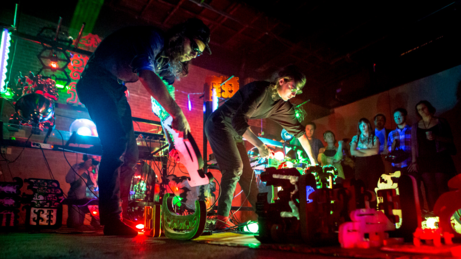
The art duo MSHR premieres Macro Synthetic Helio Resistor, a quadraphonic performance involving their new Boolean logic chip-based analog modular synthesizers in a feedback system with lasers, strobes and incandescent lights.
MSHR is the collaborative project of Birch Cooper (b.1985) and Brenna Murphy (b.1986, Edmonds, Wash.). Cooper and Murphy build and explore systems to reveal pathways toward ecstatic sensory experience. They work at the intersection of digital sculpture, analog circuitry and ceremonial performance. Their physical projects have largely revolved around analog light-audio feedback systems built from macro-arrangements of their sculptural synthesizers. On the virtual side, they weave computer generated portraits of inter-dimensional entities and psychedelic realms.
MSHR emerged from the five-person art collective Oregon Painting Society in 2011 and has since exhibited and performed at Upfor, Portland; Kunsthaus Langenthal; Postmasters Gallery, NYC; Musee des Artes Creteil; Cell Projects, London; Transmediale, Berlin; TBA, Portland; Yerba Buena Center, San Francisco; The Peckham Pavilion, 53rd Venice Biennale; Kunstverein Dusseldorf; Three Walls, Chicago; Western Front, Vancouver; American Medium, NYC; Appendix Project Space, Portland; Le Dictateur, Milan. They were 2014 artists-in-residence at Eyebeam and are currently artists in residence at Pioneer Works.
Brenna Murphy made her Chicago debut in September 2012, when she presented a new live performance entitled SkyFace~TextureMappr and a collection of video works for Lampo and Conversations at the Edge.
This performance is presented in partnership with Lampo. Founded in 1997, Lampo is a non-profit organization for experimental music and intermedia projects.

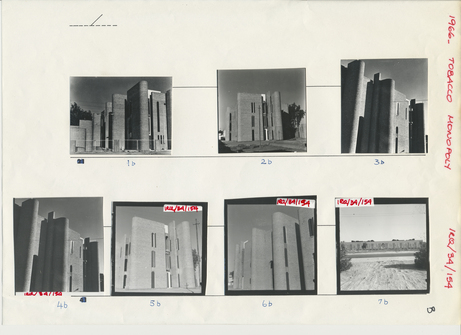
Rifat Chadirji, IRQ/314/154: Offices and stores, Tobacco Monopoly Administration, Baghdad, 1966. Photographic paste-ups, 8.27” × 11.69”. Courtesy of the Arab Image Foundation.
Opening Reception: Every Building in Baghdad: The Rifat Chadirji Archives at the Arab Image Foundation
Sep 15, 2016
(6pm)
Opening Reception
Please RSVP
Please join us for a reception and talk by curator Mark Waisuta to celebrate the opening of our new exhibition, Every Building in Baghdad: The Rifat Chadirji Archives at the Arab Image Foundation.
Thursday, September 15
6pm: Talk by Mark Wasiuta
6:30-8pm: Opening Reception
Mark Wasiuta is a curator, writer, and architect who teaches at GSAPP, Columbia University where he is Co-Director of the MS degree program Critical, Curatorial, and Conceptual Practices in Architecture. Over the last decade, as Director of Exhibitions at GSAPP, he has developed a body of research and archival exhibitions that focus on underexamined practices of the postwar period. Recent exhibitions, produced with various collaborators, include, Control Syntax Rio at Het Nieuwe Instituut, Environmental Communications: Contact High at the Chicago Architecture Biennial La Fine Del Mondo, at the 14th International Architecture Exhibition at the Venice Biennale, as well as Information Fall-Out: Buckminster Fuller’s World Game, and Les Levine: Bio-Tech Rehearsals 1967–1973 at the Arthur Ross Architecture Gallery. He is co-editor and co-author of Dan Graham’s New Jersey. Forthcoming projects include the exhibitions, Detox USA, at the 3rd Istanbul Design Biennial and the publications, Documentary Remains, Environmental Communications: Contact High, and Collecting Architecture Territories. He is partner in the design and research office the International House of Architecture.
The Graham would like to thank Perrier for supporting our public programs.
For more information on the exhibition, Every Building in Baghdad: The Rifat Chadirji Archives at the Arab Image Foundation, click here.
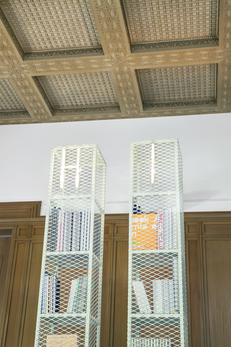
View of the Graham Foundation bookshop designed by Ania Jaworska, Chicago, 2013. Photo Travis Roozée.
Bookshop Summer Sale
Graham Foundation
Aug 06, 2016 - Aug 13, 2016
(11am)
Please join the Graham Foundation for its inaugural Bookshop Summer Sale beginning August 6th, 2016 with a day of refreshments, music, and special discounts. The sale will run through August 13th, 2016 ending on the final day of our current exhibition, The Flesh Is Yours, The Bones Are Ours. Don't miss the unprecedented deals or your last chance to view the work of Michael Rakowitz installed in the Madlener House galleries—select titles up to 50% off.
The Graham Foundation Bookshop offers a selection of publications produced by the Foundation's grantees and titles related to our public programming, as well as new, historically significant, and rare publications on architecture, urbanism, art, and related fields. The bookshop carries monographs, exhibition catalogues, research, and theory-based titles from a range of publishers such as Sternberg Press, Lars Müller, Soberscove, Primary Information, Hatje Cantz, Architectural Association Publishers, Columbia GSAPP, MIT Press, Princeton Architectural, San Rocco, MAS Context, and many more.
New Architectures and Urbanisms of Decentralization
Moderated by Judith De Jong and Marshall Brown
Jul 21, 2016
(6pm)
Panel Discussion
Please RSVP
References to American suburbia typically conjure distinct images of vast, homogenous tracts of post-war residential neighborhoods, filled with white, middle-class families who left the city in search of the “American Dream” of the single-family house and lawn. Yet decentralization is neither new, nor monolithic, nor specifically American; rather, it is evident as early as the third millennium BCE outside the typical Mesopotamian city, where outlying settlement was often focused on commerce and industry. Early American suburbia was likewise often industrial, and developed as distinct municipalities, some of which were annexed by their central cities, others of which faded into oblivion, and still others of which developed into thriving economic hubs. Simultaneously, decentralization acted back upon the traditional city center, forcing a reconsideration of its own forms and qualities.
The contemporary American metropolis is therefore characterized by a wide range of decentralized urbanisms, many of which exhibit formal and spatial patterns that are much more open than in traditional settlement-what Lewis Mumford called “spatial looseness.” Because these patterns are harder to identify, understand, and instrumentalize, and because the architecture is so often banal, these conditions are easily dismissed. There is significant value in understanding them, however, as they not only are the largest and fastest growing parts of the metropolis, but also are evolving extremely quickly. They are, therefore, the primary sites of potentially innovative new architectures and new urbanisms.
This roundtable thus asks: what are the new forms of architecture and urbanism of decentralization in the American metropolis? What are the primary forces being materialized in their making (new and evolving collectives, democratic processes, free markets, new forms of mobility, others)? And what are the opportunities for the future?
Marshall Brown is a licensed architect and principal of Marshall Brown Projects. He is also an Associate Professor at the IIT College of Architecture. He is a Graham Foundation grant awardee, is currently exhibiting in the U.S. Pavilion for the 2016 Venice Architecture Biennale, and participated as a finalist in the 2012 Navy Pier Centennial Vision competition. He has new projects on view in Chicago during spring and summer 2016 at both the Arts Club of Chicago and Western Exhibitions gallery. Marshall Brown’s work has been exhibited at the Museum of Contemporary Art Detroit and Western Exhibitions in Chicago. He has served on the editorial board of the Journal of Architectural Education and has lectured at the Chicago Humanities Festival, University of Michigan, Northwestern University, the Graham Foundation, and the Arts Club of Chicago. His projects and essays have appeared in several books and journals, including Metropolis, Crain’s, Architectural Record, The New York Daily News, Art Papers, The Believer, and New Directions in Sustainable Design.
Robert Bruegmann is an historian and critic of the built environment. He received his PhD in art history from the University of Pennsylvania in 1976 and since 1979 has been at the University of Illinois at Chicago where he is currently Distinguished Professor Emeritus of Art History, Architecture and Urban Planning. Among his books are The Architects and the City: Holabird & Roche of Chicago 1880-1918 published in 1998, Sprawl: A Compact History, 2005 and The Architecture of Harry Weese, 2010. He is currently acting as editor of a book tentatively titled Art Deco Chicago about Chicago architecture, industrial design, graphic design and fashion c. 1910-50. His main areas of research are in the history of architecture, urban planning, landscape and historic preservation.
Architect Claire Cahan is Design Director at Studio Gang, an architecture and urbanism collective based in Chicago and New York. Engaging projects of various scales and typologies, Studio Gang uses design as a medium to connect people socially, experientially, and intellectually. The Studio’s research-based approach is coupled with a focus on sustainability to produce built projects that engage with pressing social, political, and ecological issues, such as the recently completed Arcus Center for Social Justice Leadership at Kalamazoo College, as well as design proposals for new typologies including Polis Station, which works with community partners to reorient police stations toward the neighborhoods they serve. Claire has led and collaborated on many of the Studio’s most pivotal projects, from the Northerly Island framework plan to a proposal for Cicero, Illinois. Developed as part of Museum of Modern Art’s 2012 exhibition Foreclosed: Rehousing the American Dream, the proposal transforms the inner-ring suburb into a thriving live-work community. A Chicago native, Claire holds a Master of Architecture from Tulane University in New Orleans. Living and learning in different urban contexts informs her understanding of the challenges facing cities today and reinforces her belief in the essential relationship between built and natural environments.
Judith K. De Jong is an architect, urbanist, and Associate Professor of Architecture at the University of Illinois at Chicago, whose work investigates the reciprocating relationships between architecture and the city, and the opportunities for design innovation in architectures and urbanisms of mass culture. Her book, New SubUrbanisms, was published in 2013. De Jong has received support from the Graham Foundation and the Great Cities Institute, where she was a 2011-2012 Faculty Scholar, and has presented her work in the U.S., Mexico City, Hong Kong, and Israel. She has written for MONU, Land Forum, CITE: The Architecture and Design Review of Houston, and The Journal of Architectural Education, among others, and her proposal “How the Strip Mall Can Save Suburbia” was a finalist in the 2010 Build A Better Burb competition. De Jong received a Master of Architecture in Urban Design from Harvard University, and a Bachelor of Architecture from the Pennsylvania State University.
Andrew Metter is currently Principal Design Consultant at Epstein in Chicago. He holds a Master of Architecture from Washington University in St. Louis. His work has received numerous design awards including Chicago Chapter AIA Distinguished Building Honor Awards. He has been the recipient of Design Awards from Progressive Architecture magazine, as well as the Architectural League of New York. His architectural works have been published in Progressive Architecture, Architecture, Architectural Record, Architect, and 150 Years of Chicago Architecture. His work has been exhibited at the Art Institute of Chicago, Museum of Science and Industry Chicago, Institute d’Architecture Francais, Paris; and the Gulbenkian Museum, Lisbon. He is an adjunct professor at IIT, and recently served as Co-Chair of the Board of Overseers of The College of Architecture at IIT. In conjunction with his IIT studio, Metter has pursued the study of leveraging existing infrastructure network systems to address the re-distribution of food, social services, and manufacturing in the City of Chicago. He is also past Chair of the Gold Medal Committee of the National AIA Committee on Design. His Serta project, which has been published widely, has received a number of national and international awards, including being named “Best of 2009” by Blair Kamin of the Chicago Tribune, and a 2010 National AIA Honor Award.
Juan Gabriel Moreno, AIA, is an award winning architect and President/Founder of JGMA (Juan Gabriel Moreno Architects). Mr. Moreno was born in Bogota, Colombia and studied architecture at California State Polytechnic University Pomona. He also lived in Florence, Italy where he studied under Superstudio founders Christiano Toraldo di Francia and Gianni Pettena. Mr. Moreno has been creating provocative works for more than 30 years. His portfolio includes having worked on projects throughout the United States and internationally. These projects represent a diverse portfolio of public and private work in typologies ranging from education, government, research, commercial, urban planning, product design and graphic design. However, in 2010 he launched JGMA with the sole purpose of transforming Chicago’s diverse communities with his architecture. Since then, JGMA has become one of the most highly acclaimed design firms in Chicago. In 2015 was recognized by Architect Magazine as one of the Top 50 Design Firms in the United States. Additionally, JGMA’s work was on display at the inaugural Chicago Architectural Biennial and Juan was invited to several of the Biennial’s panels to share his work and vision with the design community.
Mark Muenzer is the Director of Community Development for the City of Evanston. Evanston, the home of Northwestern University, is a densely populated urban suburb immediately north of Chicago along Lake Michigan. Evanston contains a vibrant and rapidly expanding downtown as well as many traditional multi-family and single-family neighborhoods adjacent to local business districts and numerous CTA and Metra transit stations. Muenzer heads a department of 35 staff members in four different department divisions – Building & Inspection Services, Planning & Zoning, Housing & Grants Administration and Transportation & Mobility. Prior to his tenure with Evanston, he was with the City of Chicago Dept of Planning & Development and managed the City’s Plan Commission and Zoning Board of Appeals and also served as the Community Development Director for the City of Countryside. He holds Bachelors in Political Science from Gannon University (PA) and a Masters in Community Planning from the University of Cincinnati. He resides in Chicago’s Ravenswood neighborhood.
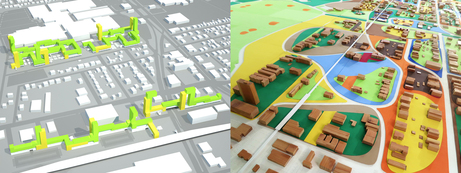
Image: “How the Strip Mall Can Save Suburbia” by Judith K. De Jong and “Smooth Growth” by Marshall Brown
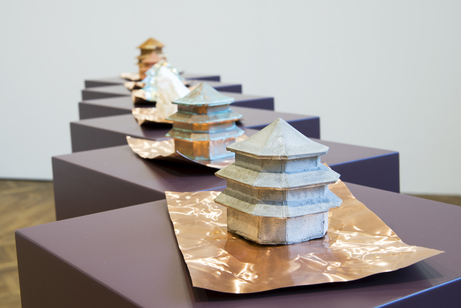
Aki Nagasaka, Project T, T for Taut, 2010
Absence and Transverse: Translations across Time, Space, and Medium in Istanbul
Esra Akcan
Jun 30, 2016
(6pm)
Talk
Please RSVP
Taking its inspiration from Michael Rakowitz’s engagement with the work of an Armenian artisan and his Turkish pupil in the exhibition The Flesh Is Yours, The Bones Are Ours, this talk traces the intertwined stories of similar translations across time, space, and medium that end in Istanbul: the work of Armenian photographer Abdullah Frères during the Ottoman Period; the built environs of Turkish and German architects Sedad Eldem and Bruno Taut during the Early Republic; and the output of British and Japanese contemporary artists Victor Burgin and Aki Nagasaka. All the exhibitions, including the one on view at the Graham Foundation and the others that materialize in the lecture, perform unordinary acts of architectural history and preservation, bearing witness to the power of transversal dialogues against the absences created by historical violence.
Esra Akcan is associate professor in the Department of Architecture at Cornell University. She completed her architecture degree at the Middle East Technical University in Turkey, and her PhD and postdoctoral degrees at Columbia University. She has taught history-theory classes and architectural design studios at the University of Illinois at Chicago, Humboldt University (Berlin), Columbia University, the New School, Pratt Institute, and METU (Ankara, Turkey). Her awards and fellowships include those from the American Academy in Berlin, the University of Illinois at Chicago, the Institute for Advanced Studies in Berlin, the Graham Foundation, the Clark Institute, the Getty Research Institute, the Canadian Center for Architecture, the College Art Association, the Mellon Foundation, DAAD and KRESS/ARIT. Akcan is the author of the Architecture in Translation (Duke University Press, 2012), Turkey: Modern Architectures in History (Reaktion, 2012, with Sibel Bozdoğan), Çeviride Modern Olan (YKY, 2009), and (Land)Fill Istanbul: Twelve Scenarios for a Global City (124/3, 2004). She has guest-edited issues for Domus m (on globalization) and Centropa (on German-Turkish history), and coedited an issue for Nakhara (on writing Asian modernity). Her more than one-hundred published articles include writings on contemporary theory (critical and postcolonial theory, globalization); modern and contemporary architecture in West Asia; Ottoman architectural photography; established Euro-American architects’ engagement with the Gulf States; and the Middle Eastern diaspora in Europe.
Akcan’s scholarly work engages a geopolitically conscious global history of architecture, where her research on modern and contemporary architecture and urbanism foregrounds the intertwined histories of Europe and West Asia. Her book Architecture in Translation: Germany, Turkey and the Modern House offers a new way to understand the global movement of architecture that extends translation beyond language to visual fields. Advocating a commitment to a new culture of translatability from below and in multiple directions, it aspires toward cosmopolitan ethics and global justice. Her coauthored book Turkey: Modern Architectures in History contributes to a series that aims to produce an inclusive survey of modern world architecture, and is the first volume in any language to cover the entire twentieth century in Turkey. She is currently working on her next book on the urban renewal of Berlin's immigrant neighborhood, through which she explores a theory of open architecture.
Image: Aki Nagasaka, Project T, T for Taut, 2010.
For more information on the exhibition, The Flesh Is Yours, The Bones Are Ours, click here.

 PREVIOUS POSTS