Reveal: Studio Gang Architects
Pop-up Bookshop
Architecture and Design Film Festival
May 05, 2011 - May 09, 2011
(8:15pm)
Gene Siskel Film Center
164 North State Street
Chicago, IL 60601
About the Festival
The Architecture & Design Film Festival will showcase 39 films from 11 countries, and feature a dynamic program of films, including Graham Foundation funded films Citizen Architect – Samuel Mockbee and the Spirit of the Rural Studio by Sam Wainwright Douglas, Space, Land and Time: Underground Adventures with Ant Farm by Elizabeth Federici and Laura Harrison, and Wilderness Utopia by Terence Gower. There will also be panel discussions and Q&As with filmmakers, architects and designers.
Graham Foundation Pop-up Bookshop
The Graham Foundation will operate a pop-up bookshop at the Gene Siskel Film Center throughout the run of the festival. Recently published books funded by the Graham Foundation, new publications from William Stout Books and the Architectural Association, and magazines including Joseph Grima’s first issue of Domus and a special issue of Abitare featuring Zaha Hadid will be available.
Jeanne Gang Book Signing
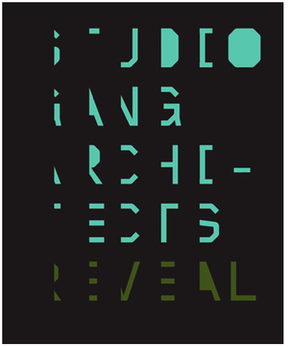
Following a screening of Studio Gang Architects: Aqua Tower, Jeanne Gang will sign copies of her new book Reveal on Sunday, May 8 from 6:30-7:00PM.
The bookshop hours are as follows:
May 5, 8:15 – 10PM
May 6, 3PM – 10PM
May 7, 1PM – 10PM
May 8, 1PM – 10PM
May 9, 6PM- 10PM
For more information on the festival, click here.

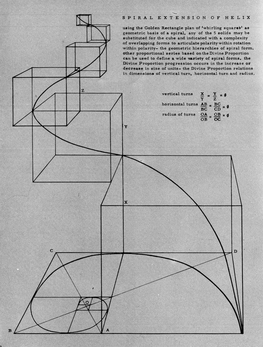
Anne Griswold Tyng, “Form finds Symmetry in Geometry,” in Zodiac 19, 1969
Dynamic Symmetries in the work of Anne Tyng
Alicia Imperiale
May 02, 2011
(6pm)
Talk
Please RSVP
In conjunction with the Graham’s current exhibition, Anne Tyng: Inhabiting Geometry, Alicia Imperiale will discuss Tyng’s seminal essay Geometric Extensions of Consciousness, published in the Italian architectural journal Zodiac 19 in 1969. In the article, Tyng proposes geometries that would open up architectural form by following natural laws of growth in plants and organisms. She writes, "I have found a geometric progression from simplicity to complexity of symmetric forms linked by asymmetric process,"1 and goes on to demonstrate the power of geometry as the invisible driving force in natural forms intrinsic to her research, astonishing drawings, and architectural projects.
Zodiac was published in Milan from 1959-1973. In a number of issues, editor Maria Bottero assembled an extraordinary group of international architects around the themes of geometric studies and the influence of natural systems on architectural design. Imperiale will discuss Tyng’s work in relation to her contemporaries, such as Buckminster Fuller, Zvi Hecker and Alfred Neumann, Keith Critchlow, Robert LeRicolais, Moshe Safdie, Rinaldo Semino, Michael Burt, Renzo Piano, and others, also published in Zodiac.
1 Anne Griswold Tyng, “Form finds Symmetry in Geometry,” in Zodiac 19, 1969, page 139.
Alicia Imperiale, Architect, is Assistant Professor of Architectural History/Theory and Design at the Tyler School of Art, Temple University. Her design and written work focuses on the impact of digital technologies on art, architecture, representation, and fabrication. She is a PhD candidate at Princeton University. Her dissertation is based on the theoretical projects of Italian architect Rinaldo Semino which contextualizes Semino’s work in a larger milieu of megastructural design, cybernetic studies, and radical political events in Italy from 1958-1973. Her essay Organic Italy: The Troubling Case of Rinaldo Semino was recently published in Perspecta 43: Taboo (Yale University Journal of Architecture, MIT Press, 2010). In relation to her work on the politics of the 1960s Imperiale is a co-curator of the exhibit Clip, Stamp, Fold: The Architecture of Little Magazines 196X-197X. She is a contributor to the recent book, of the same name published by Actar/Birkhäuser, 2010. Imperiale has taught design and visual theory at Southern California Institute of Architecture, Pratt Institute, Columbia University, Cornell University, and Parsons School of Design. She holds a B.Arch from Pratt Institute, an MFA in Combined Media from Hunter College and an MA from Princeton University. She was a Van Alen/Dinkeloo Visiting Fellow at the American Academy in Rome.
Imperiale’s article, Dynamic Symmetries in the work of Anne Tyng, will be included in an exhibition catalog co-published by the Institute of Contemporary Art Philadelphia (ICA) and the Graham Foundation. Anne Tyng: Inhabiting Geometry will feature drawings and documentation of projects by Tyng; photographs of the installations at both the ICA and the Graham Foundation; additional essays by Jenny Sabin and Srdjan Jovanoviç Weiss, and an illustrated chronology of Anne Tyng’s life by Ingrid Schaffner and William Whitaker. The catalog will be designed by Project Projects and distributed by DAP.
Florian Hecker
Lampo Performance Series
Apr 30, 2011
(8pm)
Performance
Please RSVP
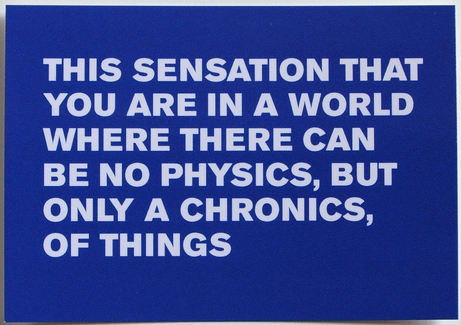
Interested in notions of surprise and abrupt change in sound, Florian Hecker will perform Speculative Solution for the first time in the U.S. on April 30, 2011. Speculative Solution is a series of “micro-chronics” or auditory sequences that range from extreme stasis to the most dynamic intensities. Hecker has set out to create new music exploring philosopher Quentin Meillassoux’s concept of “hyperchaos.”
Here is Hecker’s predicament: it may be impossible to create a rational presentation of hyperchaos because hyperchaos may not be experienceable. While any composition has a finite duration, “hyperchaos is a theory of time, a theory to show that time is not becoming,” as Meillassoux puts it, which we understand as a sort of continuity or reference to the infinite nature of the universe. And, achieving real disorder is impossible anyway, “because disorder is just another form of order than the one you expect,” where fast-moving sound is a cliché of randomness and merely another form of organization…
His performance delivers a perfect combination of theoretical underpinning and drop-dead digital disorientation. Urbanomic, the UK organization that originally commissioned the project, features a conversation between Hecker, Meillassoux and writer Robin Mackay on its website. Click here to access the PDF.
Recent performances by Florian Hecker (b. 1975, Augsburg, Germany) include Push & Pull, Tate Modern, London (2011); Instal, Tramways, Glasgow (2010); Hebbel am Ufer, Berlin (2010) as well as a series of collaborations with Aphex Twin at Warp 20, Cité de la Musique, Paris and Sacrum Profanum, Krakow, both in 2009. Solo exhibitions include MMK Museum für Moderne Kunst, Frankfurt (2010); Chisenhale Gallery, London (2010); Bawag Contemporary, Vienna (2009) and Sadie Coles HQ London (2008). In addition, he has an extensive discography, and he also works closely with visual artists, including Angela Bulloch, Carsten Höller, Florian Pumhösl and Cerith Wyn Evans. Hecker lives in Vienna, Austria and Kissing, Germany.
Hecker last performed at Lampo in October 2006, when he presented a new 6-channel computer work – a hybrid of his artificial neural network piece and other material that later became "Acid in the Style of David Tudor" (eMego 2009). In November 2002 Hecker and Yasunao Tone premiered "Palimpsest" at Lampo, in the duo's first U.S. appearance. Hecker also presented his solo work "Stocha Acid Vlook."
This performance is presented in partnership with Lampo. Founded in 1997, Lampo is a non-profit organization for experimental music, sound art and intermedia projects. For information and to add your name to the Lampo list, contact info@lampo.org or visit www.lampo.org.
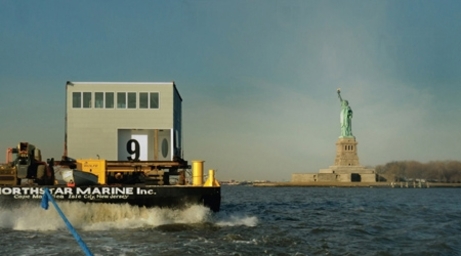
Film still, Saving Lieb House, 2009.
An Evening of Short Films
Architecture and Design Film Festival Preview
Apr 26, 2011
(6pm)
Screening
Please RSVP
On April 26th, 2011, in anticipation of Chicago’s first Architecture and Design Film Festival, the Graham Foundation and the Festival organizers will partner to present an evening of short films followed by a discussion with filmmaker Jim Venturi. Screenings will include:
Six Pound Chair (Dir. Eames Demetrious, 2004, 5 min.)
Eames Demetrios believes that, along with art and film, design is a process of discovery. By examining Emeco and Frank Gehry's Super Light chair, the Six Pound Chair reveals the inner workings of this process.
Glenn Murcutt: Architecture for Place (Dir. Bruce Inglis, 2010, 11 min.)
Glenn Murcutt is Australia’s most internationally recognized architect. In 1992 he was awarded the Gold Medal of the Australian Institute of Architects; in 1996 he was awarded the Order of Australia (AO); in 2002 he received the Pritzker Prize, considered the equivalent of the Nobel Prize for architecture; and in 2009 he was awarded the Gold Medal of the American Institute of Architects. The short film "Architecture For Place" was made to accompany a touring exhibition of Murcutt's work.
Saving Lieb House (Dir. James Venturi, 2009, 24 min.)
In 1969 world-renowned architects Robert Venturi and Denise Scott Brown designed the world's first pop-art house. Forty years later, when the couple learned that their brainchild would be demolished, they enlisted their son, Jim, and friend and colleague, Fred Schwartz, to save the house. Saving Lieb House documents the 97-mile journey of the house from Barnegat Light, NJ through the rough waters of the Atlantic, under the Verrazano Bridge, past crowds of cheering New Yorkers, the Statue of Liberty, and the Brooklyn Bridge, to its new home in Glen Cove, New York.
James Venturi is a filmmaker and owner of Light From Light Films (LFLF). Venturi is currently working on, “Learning from Bob and Denise,” a documentary on the architecture and ideas of his parents, Robert Venturi and Denise Scott Brown. “Learning from Bob and Denise” was supported by two grants from the Graham Foundation in 2006 and 2009.
From May 5 – 9 The Architecture & Design Film Festival at the Gene Siskel Film Center will showcase 39 films from 11 countries, and feature a dynamic program of films, panel discussions and Q&As with filmmakers, architects and designers and a pop-up architecture bookshop organized and operated by the Graham Foundation.
Related Links
Architecture and Design Film Festival
http://adfilmfest.com/
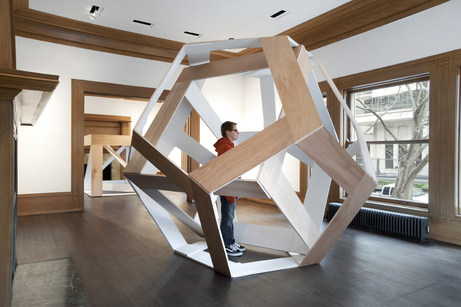
Dodecahedron with nested cube, "Anne Tyng: Inhabiting Geometry," Living Room, Madlener House, Chicago, 2011 © Graham Foundation. Photo: James Prinz Photography.
Opening Reception, Anne Tyng: Inhabiting Geometry
Apr 15, 2011
(6pm)
Opening Reception
Anne Tyng: Inhabiting Geometry presents the work of the visionary architect and theorist Anne Tyng. In 1965, Tyng was one of the first women to receive a fellowship from the Graham Foundation. She and curators Ingrid Schaffner, Srdjan Jovanovic Weiss, and William Whitaker will join us for the opening of the exhibition.

 PREVIOUS POSTS